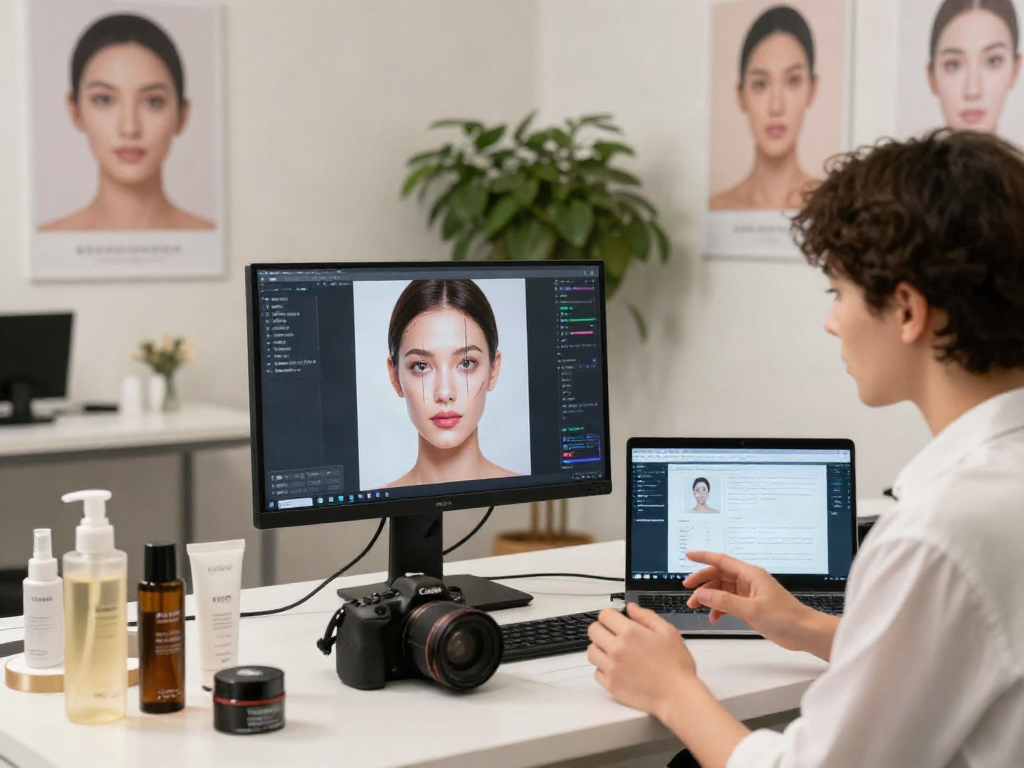
Understanding the Test of Attractiveness
In the age of social media and digital self-expression, understanding one’s attractiveness has become a topic of considerable interest. The test of attractiveness has emerged as a popular tool among individuals seeking to gauge their facial appeal through various metrics. This test evaluates a person’s facial symmetry, proportions, and distinct features to derive an attractiveness score. The rise of AI technology has not only simplified this process but also enabled more nuanced analyses than ever before.
What is a Test of Attractiveness?
A test of attractiveness usually involves the evaluation of specific facial features and characteristics. It can be a straightforward self-assessment or an advanced AI-powered analysis that examines a user's uploaded photograph. The goal of a test of attractiveness is to provide a quantified measure of one's beauty based on systematically analyzed facial traits.
The Science Behind Attractiveness Ratings
The science behind attractiveness ratings is deeply rooted in psychological and biological studies. Research indicates that certain features, such as facial symmetry, clear skin, and a well-defined jawline, contribute significantly to perceived beauty. For instance, studies show that symmetrical faces are often rated as more attractive because they are subconsciously associated with genetic health and fitness. These ratings can also be influenced by cultural standards, which may vary globally, yet many underlying principles remain consistent across societies.
How AI Enhances the Attractiveness Evaluation
AI has revolutionized the attractiveness evaluation process. Advanced algorithms can analyze hundreds of facial landmarks, measuring symmetry and proportions with precision. Tools that utilize AI can provide a score based on quantitative data, which may include the golden ratio and other mathematical ratios that have been historically associated with beauty. These tests are not only faster but also less subjective, providing users with a more reliable assessment.
Common Myths About Attractiveness Tests
Myth #1: Attractiveness Tests Are Just for Fun
While many people approach attractiveness tests as a light-hearted activity, there's a foundation of science that underpins their structure. These tests analyze physical attributes in a way that can yield valuable insights, whether for personal reflection or for insights into social dynamics.
Myth #2: Results Are Only Based on Physical Features
One prevalent myth is that results are solely focused on physical features. In reality, attractiveness is multi-dimensional and can also be influenced by factors such as facial expressions, personality traits, and even cultural perceptions. Many tests incorporate metrics beyond mere physicality, considering how a person presents themselves as well.
Myth #3: AI Cannot Accurately Judge Attractiveness
Despite skepticism, AI has proven itself capable of delivering reliable ratings by minimizing human biases. The technology continually learns from vast datasets, refining its algorithms to provide more accurate and nuanced assessments. Many users have found AI assessments to be surprisingly reflective of their social experiences and self-perception.
Understanding Your Attractiveness Score
What Does Your Score Mean?
Your attractiveness score is typically a numerical representation of how your facial features rank against the established benchmarks for beauty. This score can range from 1 to 10 or even 0 to 100, depending on the system used. A higher score often indicates a greater degree of perceived attractiveness based on the analyzed characteristics.
Interpreting the Metrics: Symmetry and Proportions
Two critical metrics affecting your attractiveness score are symmetry and proportions. Symmetry refers to how closely the left and right sides of the face mirror each other. Proportions, on the other hand, examine the ratios between various facial features. For example, the ratio of the width of the face to its height can be a significant factor in how attractiveness is perceived.
Impact of Cultural Standards on Attractiveness
Attractiveness is not a universal concept; it is subject to cultural interpretations and standards. For instance, certain features may be admired in one culture while considered less attractive in another. Understanding these cultural variances can help individuals contextualize their scores within a broader framework of beauty standards.
Improving Your Attractiveness Score
Practical Steps to Enhance Facial Features
Improving your attractiveness score can be approached through various tangible steps. Facial exercises, proper skincare, and dietary adjustments can all play a significant role in enhancing one's appearance. Incorporating a consistent skincare routine, for instance, can help clear up skin imperfections, leading to a more favorable beauty assessment.
The Role of Confidence in Attractiveness
Confidence is a crucial yet often overlooked component of attractiveness. A person's demeanor, posture, and how they carry themselves can significantly influence how others perceive their attractiveness. Investing in personal development and cultivating a positive self-image can enhance not only your score but also how you feel about yourself.
Skincare and Grooming Tips for Better Results
To maximize your attractiveness score, it's essential to pay attention to grooming and skincare. Simple practices, such as regular cleansing and moisturizing, as well as addressing specific concerns like acne or uneven skin tone, can lead to more favorable results. Additionally, hairstyles that complement your facial structure can further elevate your appearance.
The Future of Attractiveness Testing
Emerging Trends in Beauty Technology for 2026
The beauty technology industry is evolving rapidly, and by 2026, we can expect even more innovative tools and applications for assessing attractiveness. From enhanced AI algorithms that can take into account emotional expressions to personalized beauty regimens suggested by smart devices, the future is set to integrate technology seamlessly with personal aesthetics.
How Virtual Reality Will Change Attractiveness Assessment
Virtual reality (VR) is poised to revolutionize how we perceive and assess beauty. By immersing users in lifelike environments, VR can allow individuals to experiment with different styles, makeup, and even facial modifications without permanent changes. This technology would enable more comprehensive self-assessments, allowing users to visualize potential enhancements.
Predictions for Beauty Standards and AI Influence
As AI continues to evolve, it will likely influence future beauty standards. The increasing reliance on data and technology may lead to a more inclusive definition of attractiveness that considers a wider variety of ethnicities, body types, and personal styles. This, in turn, could reshape societal perceptions of beauty, promoting a broader acceptance of diverse appearances.
What is a test of attractiveness?
A test of attractiveness is a systematic evaluation of physical features aimed at quantifying one's beauty through various metrics, often enhanced by AI technologies.
Can AI provide reliable attractiveness scores?
Yes, AI can provide reliable attractiveness scores by analyzing facial characteristics and minimizing human biases traditionally associated with subjective beauty assessments.
How can I improve my attractiveness score?
You can improve your attractiveness score by enhancing facial features through skincare, grooming, and developing confidence, which collectively influence how others perceive you.
Are attractiveness tests scientifically validated?
Many attractiveness tests are rooted in scientific principles related to symmetry, proportions, and psychological studies about beauty, lending them a degree of credibility.
What cultural factors influence attractiveness perceptions?
Cultural factors, including societal beauty standards and ideals, significantly influence perceptions of attractiveness, highlighting the subjective nature of beauty across different communities.